Feed on
Posts
Comments

Garbling in the Kin-dom

Drying the Herbs before Garbling Them

Alaska was an amazing trip. Often our tour guides would stop and gather wild flowers for us to examine. Many of the flowers and plants had medicinal qualities and were used by the native peoples for healing.

Also, when I boarded the ship for the cruise, my left knee was killing me. I had three sessions of acupuncture and started taking medicinal herbs. After a while, my knee was 90% better. I must report that my traditional medical doctor was not too enthusiastic about alternative medicine and herbs but, I thought, “I am the one in charge.”

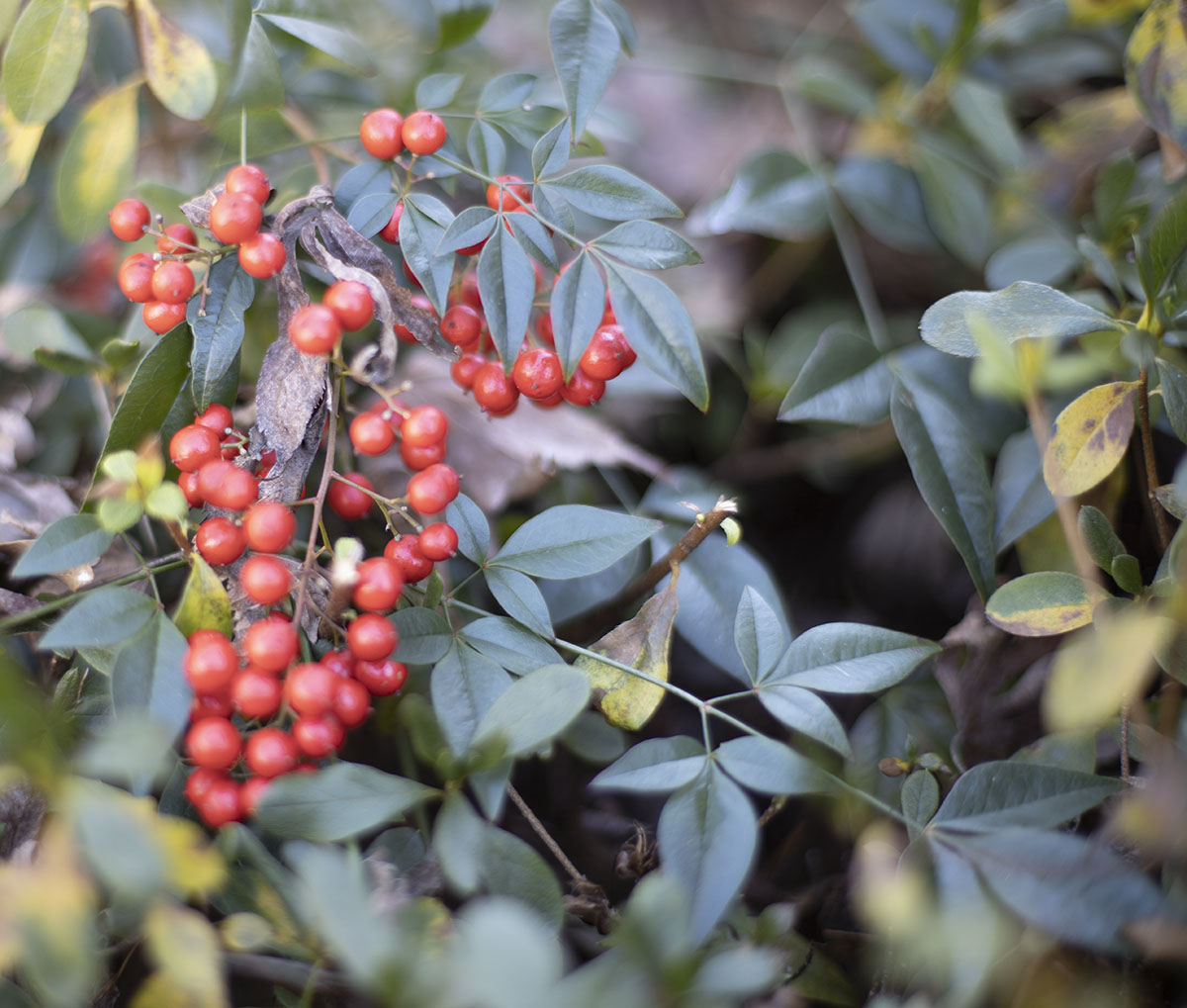
Upon returning to the North Georgia Mountains in the Southern Appalachians, I discovered that the Institute for Continuous Learning at Young Harris College in Young Harris, GA was offering a six session course on the “Medicinal Garden.” Hmm! Here we go again—plants with medicinal qualities. Maybe I should take the course. It was a good decision. After all the “tea leaves” all around me were introducing me to the new world of medicinal plants. The Southern Appalachians are blessed with an abundance of healing plants. The Native Cherokee Indians knew this and used the gifts from the Creator for healing. Continue Reading

Isaiah and Glaciers

Meade Glacier (Click for larger view)

At the beginning of the first book of Isaiah, Isaiah stands in awe and wonder before the glory of God. He saw God’s garment filling the temple. Seraphim with six pairs of wings surrounded God. “Holy, holy, holy, holy is the Creator. All the earth is filled with God’s glory (doxa)!”

Humbled, Isaiah is profoundly aware of his own nothingness before the doxa of the Creator. Isaiah was aware of his “unclean lips” as he lived among a people of unclean lips; however, the Creator sent forth an angel with a burning coal to  purify Isaiah. Then, and only then, was Isaiah ready to go forth. “Here, send me.” Send me forth to proclaim the glory and grandeur of the creator. Continue Reading

Grizzly with Cubs in Denali

Amos is one of my favorite prophets. When Amos prophesies at the king’s shrine, the king tells him to get lost. Amos does not back down. He continues to speak. In effect, he tells the king to stick it in his ear.

In today’s reading, Amos address the injustices done to the poor. He denounces exploitation, faulty scales, and anything that oppresses people. He issues a strong warning to the ruling elite.

Now Amos, in his day, believed that God directly punished injustice. Today we are more likely to say the what goes around comes around. When people treat others unjustly it usually redounds upon their own heads in some way. Alaska’s indigenous people say, “Live Carefully—What You Do Will Come Back to You.” Continue Reading

[Last night—June 29, 2007—I led the meditation at the healing service at Good shepherd Church in Hayesville, NC where I am engaged in healing ministry. I began the Soaking Prayer Service by reading from Daniel 3 adapted to reflect glaciers and Alaskan wildlife.}

Quaker Thomas R. Kelly wrote:

Do we live in the steady peace of God, a peace down at the very depths of our souls. . . ? It is a life that is freed from strain and anxiety and hurry, for something of the Cosmic Presence of God becomes ours.

This is the Cosmic Presence the three men in Daniel sing about amid the fires of travail. It is the Cosmic Presence which sustains us.

I do not know about you but when I read that God rested on the seventh day, I tend to think of creation as a one-time event. But that is not the case. All life and the universe flared forth from the Creator some 14 billion years ago.  And it is still flaring forth.

As I stood on the ice of the Meade Glacier near Skagway, Alaska, I stopped and looked. It was a graced moment. I was filled with a sense of wonder and awe. This was not an inert, dead piece of ice. It was a living thing ever changing. Walking about the glacier we found water roaring down and creating deep crevasses. The water rumbled. Maybe that is the way justice roars down. Creation is groaning to its fulfillment. The glacier itself, filled with ice worms, expands and contracts, freezes and melts. It has carved deep gorges as it dislodged huge boulders which now lay on its surface. I was filled with a sense of the power and the Cosmic Presence of God.

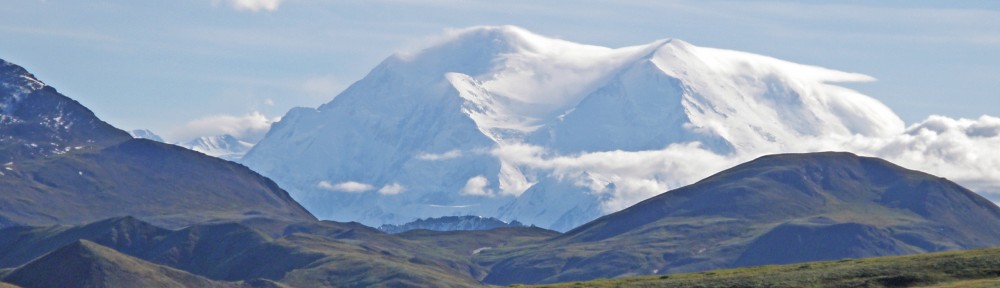
Glaciers, magnificent snow-capped mountains, a grizzly with her two cubs, a wolf, moose, elk, caribou, golden and bald eagles soaring and Denali—Mt. McKinley—rising 20,320 feet into a cloud laced blue sky—these all immersed me in the power and presence of God.

Denali--Mount McKinley 20,320 feet Click for bigger picture of Great One c. J. P. Mahon, 2010

I did not seemed to need to follow my usual daily practice of scripture reading and reflection. I was immersed in God’s primary revelation—creation.

Since I have returned I am seeing life differently. I delight in walking in the power and presence of God daily. I am living in the steady peace of God. Peripheral things seem to matter less.

Peace—shalom, salaam—health, well-being. Wholeness is ours because the Creator is still alive and at work. As Thomas Kelly says, “this is an abiding, enduring peace which never fails.” God is making all things new. God is healing us and making us whole. God is gifting us with peace, with shalom. God is wiping away every tear.

In the words of Julian of Norwich, “All shall be well, and all shall be well, and all manner of things shall be well.”

Lake in Alaska

We had a wonderful trip to the Yukon and Alaska. This picture is just one of many magnificent scenes. Enjoy reflected grandeur. The Creator is alive and well in Alaska. Be sure to click on the picture for a full screen view.

We also visited the Alaska native Heritage Center. I really like their statement of Universal Values.

Universal Values of Alaska’s Indigenous People

Show Respect to Others—Each Person Has a Special Gift

Share What You Have—Giving makes You Richer

Know Who You Are—You Are a Reflection of Your Family

Understanding and Adapting to What Life Brings—You Cannot Control Many Things

Have Patience—Some Things Cannot Be Rushed

Live Carefully—What You Do Will Come Back to You

Take Care of Others—You Cannot Live Without Them

Honor Your Elders—They Show You the Way in Life

Pray for Guidance—Many Things Are Not Known

See Connections—All Things Are Related

Alaska Native Heritage Center

Cultural Advisory Committee

In the morning as they passed by, they saw the fig tree withered away to its roots. Then Peter remembered and said to him, “Rabbi, look! The fig tree that you cursed has withered.”  Jesus answered them, “Have faith in God. Truly I tell you, if you say to this mountain, ‘Be taken up and thrown into the sea,’ and if you do not doubt in your heart, but believe that what you say will come to pass, it will be done for you. So I tell you, whatever you ask for in prayer, believe that you have received it, and it will be yours. Continue Reading

Sister Margaret

Abbey of Gethsemani--Merton's Home for 27 Years c. JPM 2010

http://www.nytimes.com/2010/05/27/opinion/27kristof.html?ref=opinion This is a link to an insightful editorial by Kristof in the New York Times on Sister Margaret.

Thomas Merton, who died over forty years ago, is right on target with his assessment of the church today:

It is true that the Lord in the Gospel speaks of His faithful as “sheep,” but that does not entitle us to assume that the liturgy is merely the organized bleating of irrational animals herded together by constraint and trained by an ingenious discipline until they carry out seemingly human actions which they are not capable of understanding. (Seasons of Celebration, 5) The patriarchs would love for us to act like bleating uneducated sheep! Continue Reading

We Are One

Lifting up his eyes to heaven, Jesus prayed saying:

“I pray not only for these,

but also for those who will believe in me through their word,

so that they may all be one,

as you, Father, are in me and I in you,

that they also may be in us,

that the world may believe that you sent me.

And I have given them the glory you gave me,

so that they may be one, as we are one,

I in them and you in me,

that they may be brought to perfection as one,

that the world may know that you sent me,

and that you loved them even as you loved me. (Jn 17)

Merton has helped me understand John’s Gospel better, especially the mystical aspects of the Last Supper discourses. Until this Easter season, I did not do much serious lectio on these discourses. They seem to be repetitive and  rambling. Now, they are starting to make sense. Continue Reading

Nakba, The Disaster

Palestinian Shop in Hebron Tagged by Settlers

May 15 marked the sixty-second anniversary of the Nakba—the Day of Disaster for the Palestinians. Nakba coincides with Israel’s Independence Day. Both sides are still fighting over land. It is not about religion or racism. The conflict is over real estate.

The present boundaries came to be over time. After Jewish Independence and the Nakba in 1948, Israel fought to gain control over more of the land. Israeli historian, Ilan Pappé, says that 531 Palestinian villages disappeared in the Nakba. Over 750,000 Palestinians became refugees. The war of 1967 allowed Israel to recapture parts of Jerusalem, the West Bank and Gaza. These all became occupied territories. Governments are prohibited by the Geneva Convention and the United Nations Charter and Resolutions from settling on occupied territory. Nonetheless, Israel has refused to withdraw to the 1967 borders and has adopted an aggressive policy of building settlements on the West Bank. The West Bank is becoming a series of isolated ghettos (bantustans). Gaza is already an “open-air prison.” The United States and the United Nations have repeatedly asked Israel to withdraw from these territories. The Palestinians are mainly Muslims but we must remember that there are a significant number of Palestinian Christians. Their numbers are dwindling as the Christians emigrate.

Succumbing to Zionist pressures after the horrors of the Holocaust, the United Nations gave Jews the right to settle in Palestine. The Zionists proclaimed that “it was a land without people for a people without land.” There was one problem with this colonialism. Arabs had populated the land for millennia.

The United States has been supportive of Israel—a democracy in the Middle East. We have contributed on the average of 7 million dollars a day in aid to Israel over the years. Whenever I contact my senators and my congressman about the plight of the Palestinians, they always conclude by reminding me that the Palestinians are terrorists. Security justifies every action.

There is no recognition that over the years Israel has terrorized Palestinians. The cleansing of the land resulted in 33 massacres, including the ferocious massacre at Deir Yassin. Menachem Begin, who later became Prime Minister, gloated over the massacre in his diary (http://www.ifamericansknew.org/history/ref-qumsiyeh.html).

The Israeli occupation continues to terrorize Palestinians today—road blocks, check points, detention, torture, reprisals on noncombatants, Israeli-only highways, and the Wall. An international investigation, which was summarily dismissed by the U. S. Department of State, documented atrocities in Gaza.

The Wall

By the same token, Israelis have documented repeated acts of terrorism. The American media tends to spotlight the Israeli side of the story. Israel justifies the continued occupation on the grounds of security, especially against suicide bombers. Recently, Roger Cohen, New York Times Columnist, reported, “Netanyahu, in a 20-minute interview, told me of  ‘the physical and psychological reality’ of a nation whose experience is that ‘concessions lead to insecurity.’” (http://www.nytimes.com/2010/04/23/opinion/23iht-edcohen.html?ref=opinion) Security remains a concern but many believe Israel overstates its case.

My wife and I participated in a study mission to Israel Palestine two years ago. As I view the situation today, I think back to three encounters we had. The most recent turmoil in Gaza was erupting.

Settlement Bar Homa

We visited a settler in Efrata who welcomed us warmly into his home. He explained that he had graduated from the University of Wisconsin and what it meant to him to live in Israel. Shortly after we returned to America, I read that a student from Efrata was among those killed at a yeshiva in Jerusalem. I emailed our host and told him I was sorry to hear about the death of the student. I concluded by telling him that I was saddened by the many deaths that were occurring in Gaza. He replied, “Please do not compare the death of the student with the death of terrorists in Gaza.” This is the statement of a man who feels his family’s safety is threatened by Palestinians.

Later in our visit, we had lunch with a Palestinian family in Beit Sahour near Bethlehem. The entire family greeted us. As we ate lunch, the daughter looked at her fiancé and then said to me, “His father was killed by the Israelis.” It was a matter of fact statement and the conversation went on without any further discussion of it. This statement reflects the resignation of a people who are powerless under oppression.

Sanctuary Bishop Chacour's Church

In Ibillin, we met a remarkable man—Archbishop Elias Chacour. He and his family were refugees from 1948. He recounted how they had been forced to abandon their beloved village. They were allowed to return only to witness the village being destroyed by the Israeli air force right before  their eyes. Yet, this man spoke with no hate in his heart. He said, “I love the Jews but I hate what they are doing to my people.” Over the years, in spite of Israeli opposition and threats of demolition, Archbishop Chacour has built the Mars Elias educational complex which educates Muslims, Christians, and Jews. The students and their families are learning how to live together. This is the statement of a man who believes people can learn to live together.

Chacour recounts how the Jews and Arabs lived side by side peacefully for many years prior to 1948. As the U. S. presses the Israeli and Palestinian leaders to work toward a solution, there may be signs of  hope on the horizon. Maybe they can live peacefully together again.

On April 19, 2010, according to AP reports, Israeli Defense Minister, Ehud Barak, said that “the world will not put up with decades more of Israeli rule over the Palestinian people.” Barak spoke on the eve of Israel’s Memorial Day which is dedicated to fallen soldiers and civilians who have died in terror attacks. The next day is Israel’s 62nd Independence Day celebration. Barak identified three major issues which need to be resolved: the status of contested Jerusalem, determination of final borders, and a solution for the Palestinian refugees. Whether these words will lead to a resolution of the conflict remains to be seen. Barak’s words were more conciliatory than the Prime Minister’s. The same report stated that, in an interview on Good Morning America, Prime Minister Benjamin Netanyahu said he would not stop expansion of settlements in Jerusalem. (http://www.masslive.com/news/index.ssf/2010/04/israeli_defense_minister_ehud.html)

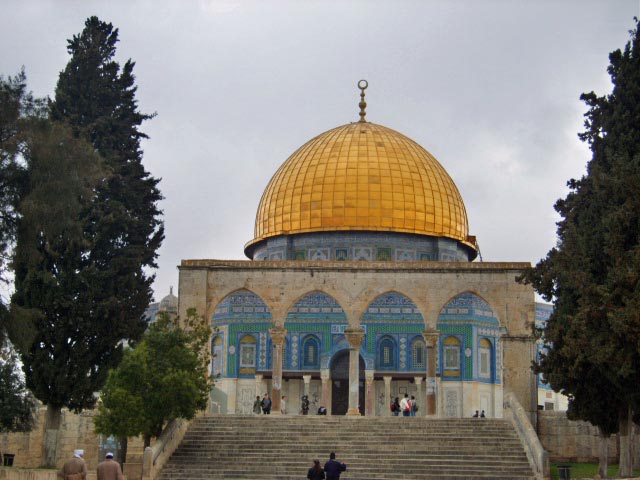
Al Aqaq Mosque Dome of the Rock

Wrongs have been perpetrated by both parties. If we know the history and facts, then it may be easier for us to follow Chacour’s advice. He asks us to be aware of the plight of the Palestinians but not to become haters of the Jews as a result. We have to offer dignity on both sides if we are to overcome the barriers to peace. Offering dignity, alay dangal, is the Filipino understanding of nonviolence.

As we remember the events and hurts and death and destruction of the past, we need to follow the lead of Elias Chacour. Offering dignity to  both sides will lead to common ground. Justice will lead to right order and right relationships between Israelis and Palestinians.

Barak’s comments may signal a new receptivity to a two-state solution on the part of the Israelis. Recent reports of the use of nonviolent resistance strategies on the part of the Palestinians may signal a new willingness to work toward a solution.

In the meantime, let us promote a peaceful solution by being in solidarity with both Jews and Palestinians. Abraham was not a Jew but we—Jews, Christians, and Muslims—are all his spiritual descendants and we can work together for peace in the Middle East. We can urge our government to pursue policies that serve the best interests of Israelis and Palestinians.

Monastery of the Holy Spirit

Monastery of Our Lady of the Holy Spirit Church

We recently attended the ground breaking for the new Monastic Heritage Center (MHC) at the Monastery of Our Lady of the Holy Spirit in Conyers, GA. It was a great event and we had the opportunity to visit with some of our monk friends there. Once you enter the long magnolia-lined drive, you know you are on sacred ground, a special place. It is a wonderfully refreshing experience to chant the Psalms with the monks and to Break Bread with them. It is refreshing to walk the grounds in solitude and to be in the presence of the Creator. I even got up at 3:35 AM so I could chant the Nocturnes and meditate in between. What a way to greet a new day!

If you have never visited the monastery, I encourage you to do so. They have a guest house and you experience genuine Benedictine hospitality. If you are already familiar with the monastery, I encourage you to consider  a gift to support this effort to help the monks become self-sufficient. We need their continued spiritual presence and this Bonsai Kin-dom (see below) in our midst. If able and interested, please contact Brother Callistus at cal@trappist.net.

The MHC will feature a complex featuring the original barn and will help people understand monasticism and the history of this place. Dom Francis Michael welcomed all. Local officials from the Arabia Mountain Heritage Area Alliance, the City of Conyers, and Rockdale County spoke–there is a deep sense of respect for the monks and the monastery in the local community. The monastery is recognized, as were monasteries of old, as the spiritual center of this community.

Archbishop Wilton Gregory gave a wonderful talk. The monastery specializes in bonsai trees. The archbishop likened the monastery to a bonsai of the Kin-dom of God. It is a miniature of the Kin-dom in our midst. It struck me–all our communities should be Bonsai Kin-doms! Solitude, prayer and solidarity will prune and nurture the Bonsai Kin-dom.

Below are links to the Atlanta Journal and Constitution article and slide show. Enjoy!

Blessings of peace,
Pat

http://www.ajc.com/lifestyle/georgia-monastery-strives-to-526516.html
http://projects.accessatlanta.com/gallery/view/travel/georgia-monastery/

Older Posts »

Bad Behavior has blocked 61 access attempts in the last 7 days.